The construction sector consumes more than one third of all raw materials in Europe and is responsible for nearly the same share of waste. Through thoughtful choices, this relationship can be reversed: less extraction, less waste, more value creation. That is why Ciril assesses every project using its Performance & Sustainability Assessment tool (PSA) and sets measurable targets, including the management of natural resources and waste.
“Every stone we don’t extract and every kilogram of waste we don’t generate reduces our impact. In this way, we build both energy- and material-neutral projects that deliver tangible benefits for tomorrow.”
Werner Wouters, Development Director at Ciril
A compass for future-proof construction
The PSA tool examines eight themes — ranging from energy and water to biodiversity and social value — and links them to concrete objectives. This results in an action plan for each project, aimed at achieving the highest possible sustainability score across all themes. This article focuses on two closely intertwined topics: waste and natural resources.
Natural resources: biobased as the new standard
Wood, hemp, flax, cellulose insulation… biobased materials are no longer exotic but are increasingly becoming standard specifications. They store CO₂ during growth, require less energy during production, and form a sustainable foundation for the buildings of tomorrow.
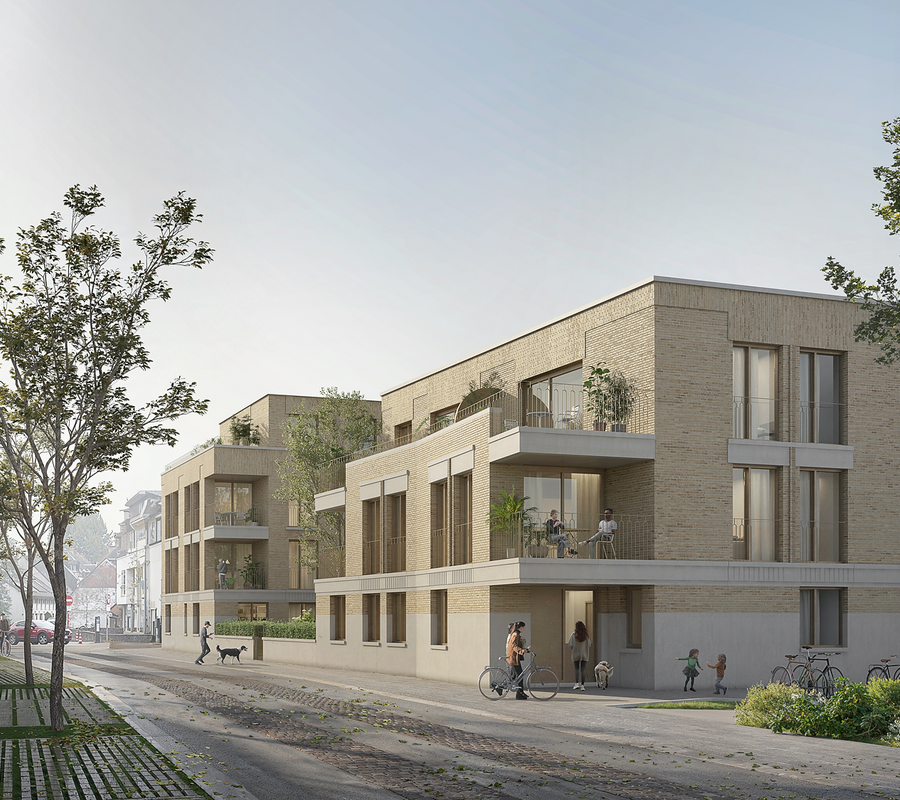
In the Benedicte residential project in Mortsel, we are taking this approach further than ever before. The entire load-bearing structure is built in cross-laminated timber (CLT), a high-quality and circular timber construction system.
Project manager Marc Lenaerts explains:
“We design all wooden connections to be demountable, so that all structural elements can be reused decades from now. The façade is also modular, built with durable thermowood. This creates a construction system that can evolve with future needs and places reuse at its core.”
But the impact is not only visible in the materials.
“Residents will mainly experience a pleasant and natural indoor climate — both in winter and summer — thanks to geothermal energy for heating and cooling.
It is the most sustainable and ecological system currently available on the market. Combined with the maximum number of solar panels, we aim for a building that will drastically reduce CO₂ emissions related to energy consumption, with even an energy surplus during sunny periods.”Marc Lenaers, Projectmanager Ciril
We therefore prioritise biobased materials wherever possible and actively work towards phasing out non-biobased alternatives. We also avoid natural stone from so-called ‘hotspot regions’ where human rights or ecosystems are under pressure.
Ceramics remain unavoidable for the time being, but we limit volumes and seek manufacturers that are transitioning to renewable energy. For flooring, engineered parquet and linoleum — both largely biobased — are preferred.
We also critically assess our largest “hidden” resource: the existing building itself. Each new project begins with an in-depth study to determine whether renovation or repurposing is feasible. This approach has already led to successful renovations, including De Kazerne in Ghent, with the renovation of Sint-Lutgardis School in Mortsel currently planned. Additionally, we have fully redeveloped underused and outdated buildings such as De Bonnefant and Hastrid in Hasselt, Le Jules in Evere and Bollard in Ghent. This shift in mindset — from tabula rasa to material sourcing on site — opens up unexpected opportunities.
Waste: from residual stream to raw material
Reducing the use of primary raw materials requires smarter waste management. That is why we design buildings to be easily demountable in the future. Revit models specify for each element how it can be dismantled, which screws or clips are used, and what recycling scenario applies. In this way, every product receives a “passport” for a second life from day one.
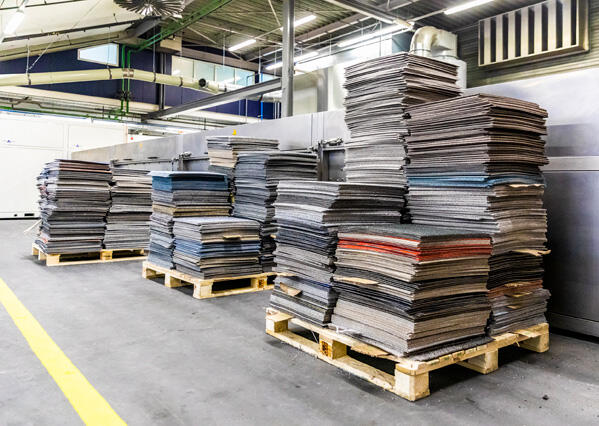
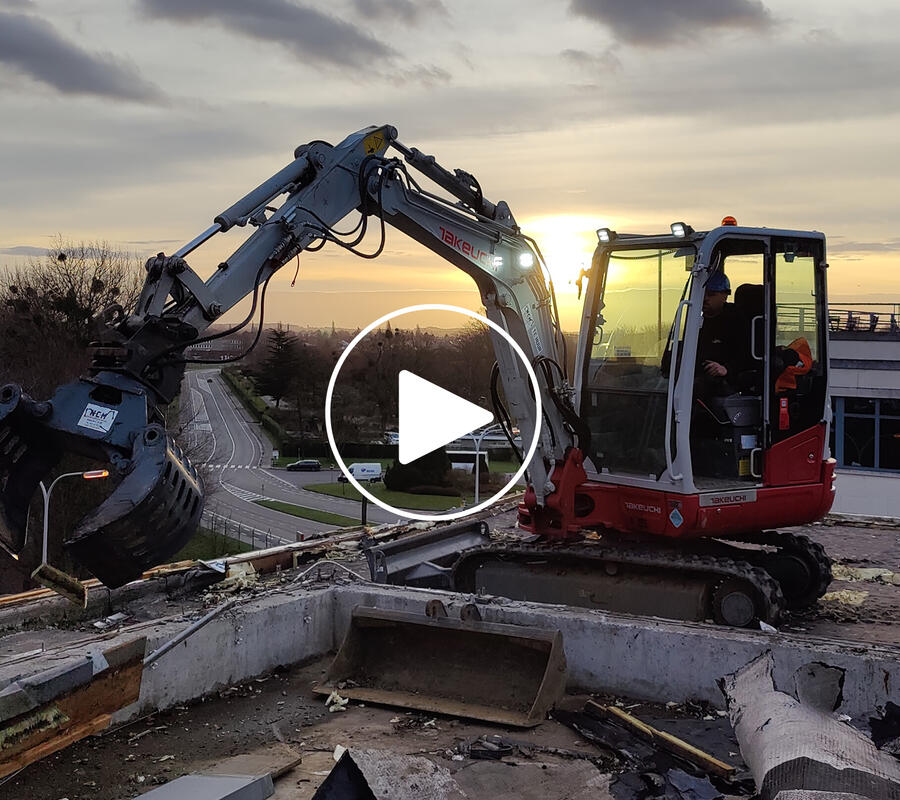
The Le Jules apartment project in Evere demonstrates how far we have already progressed. During dismantling and demolition, thousands of square metres of ceiling tiles, wall insulation, raised floors and carpet tiles — as well as numerous lighting fixtures — were reused on site in new construction projects. Several tonnes of wood, glass, gypsum, metals, cabling and rubble were also carefully sorted to be transformed into new building materials.
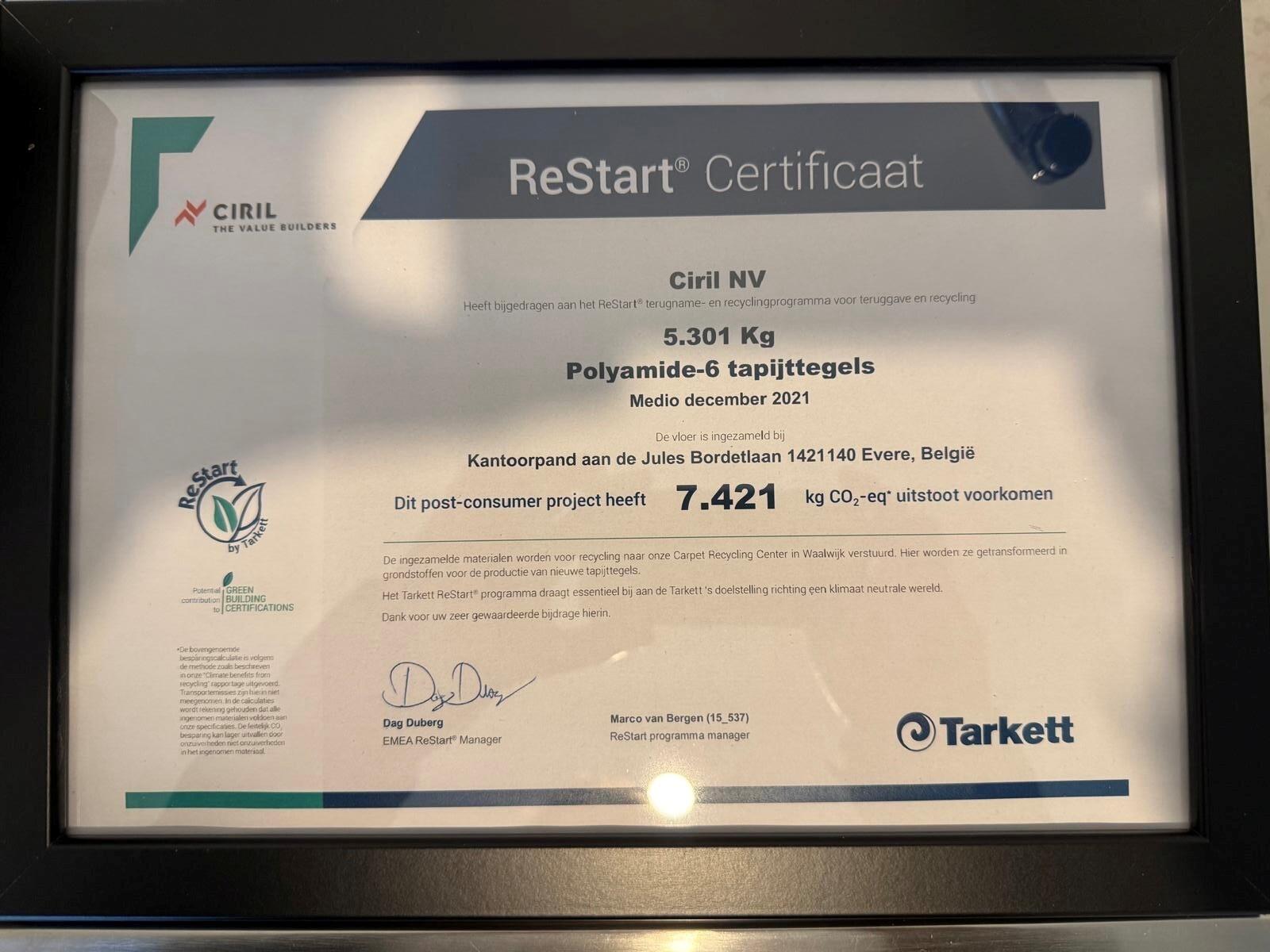
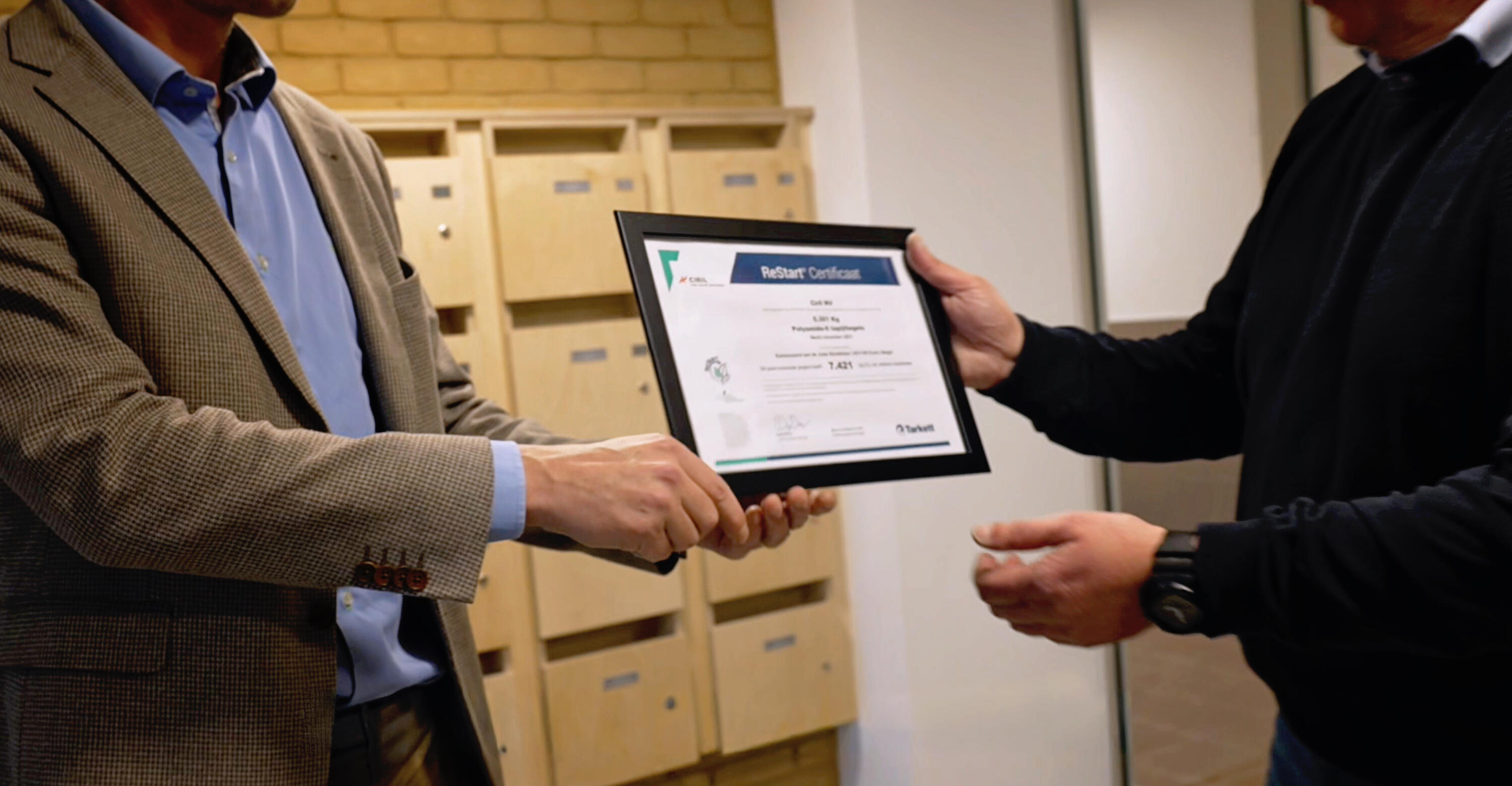
"Tarkett collected 5,301 kg of carpet tiles at Le Jules. This corresponds to the equivalent of 7,421 kg less CO₂ emissions."
Alain Rondonck, Key Account Manager at Tarkett nv
Managing existing materials in this way required a carefully planned logistics process, but resulted in 30% fewer new materials and significant savings in transport.
"Through circular dismantling, we not only saved 320 tonnes of waste, but also avoided the purchase of new raw materials worth more than half a million euros."
Robert Kurvers, Projectmanager Ciril
Our partners are encouraged to follow suit. Before construction starts, we ask every main contractor to submit a waste and recycling plan. For those with limited experience, we actively provide guidance — not out of paternalism, but from the conviction that sharing knowledge is the fastest route to sector-wide impact.
Sharing knowledge as a lever
Circularity does not stop at the construction site gate. We share data from the PSA tool with suppliers, neighbours and local authorities so that they, too, can learn from what works — and what doesn’t.
That said, the road to fully circular construction is still long. Legislation lags behind, and the market price of virgin materials remains low compared to the additional cost of reusing existing materials. That is why we regularly engage with sector organisations such as Embuild and participate in the VCDO programme of Voka to put these barriers on the agenda. One concrete proposal we advocate is a reduced VAT rate for biobased insulation, similar to the existing reduced rate for second-hand materials.
Join us – and make a difference
Every project, large or small, can already opt for smarter material use today. Ciril proves that technical feasibility is no longer an excuse. End users, too, are increasingly aware and consciously choose projects that are leading the way in sustainability.
We invite fellow developers, local authorities and designers to join us in accelerating the transition to circular construction. Our specialists are happy to share their experience with CLT, on-site recycling and demountable building systems.
Interested in creating impact together? Follow our projects at ciril.com or contact us for an exploratory conversation.